

Block Club’s new research surveying 60 CMOs and VPs at leading B2B tech companies reveals four patterns that separate companies building lasting advantage from those stuck in the feature race. These insights come from the marketers actually navigating this shift.
Key Data Points:
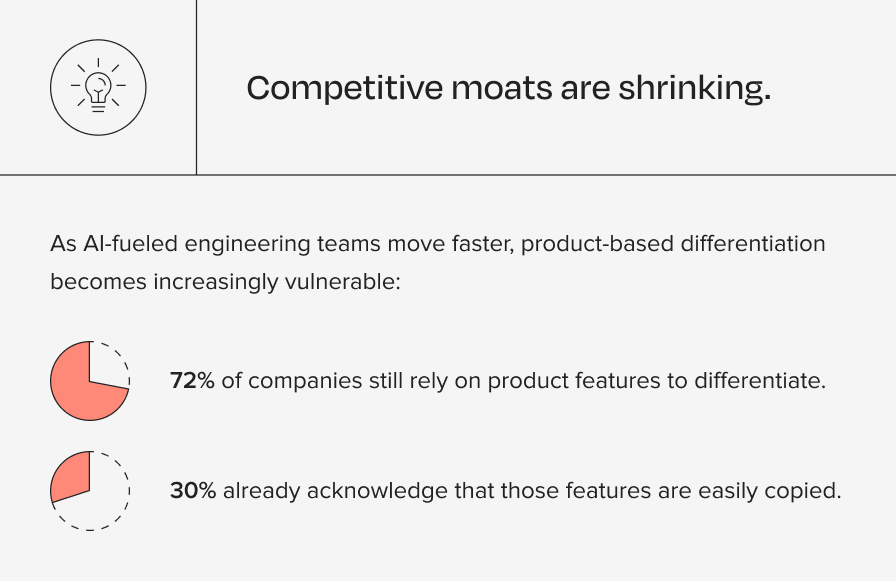
- 30% of B2B tech companies acknowledge features are easily copied
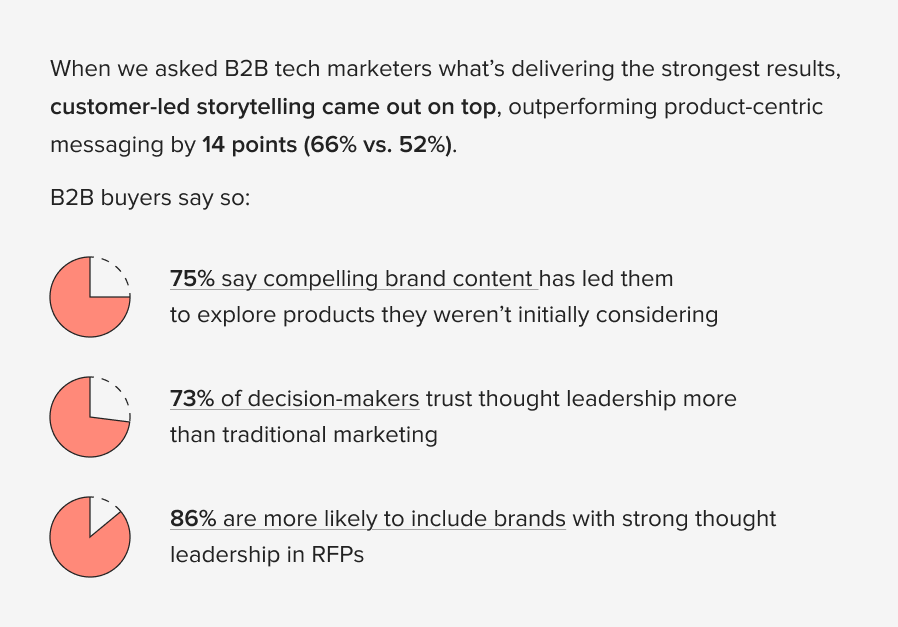
- Customer stories outperform feature messaging by 14 percentage points
- Only 8% feel fully prepared to compete on brand alone
- 56% spend less than 10% of marketing budget on brand
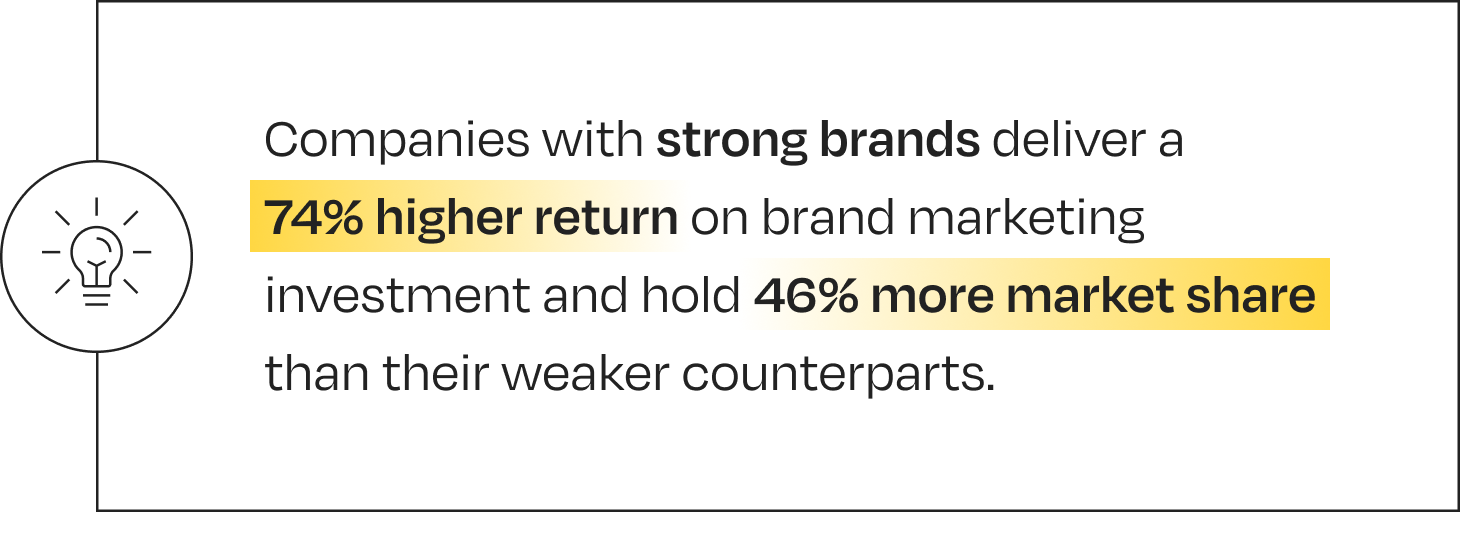
- Strong brands deliver 74% higher ROI on marketing spend and 46% more market share
What We Measured: Brand readiness (the organizational capability to compete on brand strength independent of product features), budget allocation patterns, messaging effectiveness, and competitive differentiation strategies across 60 B2B tech marketing leaders.
Finding #1: The 30% Who Admit Features Are Copyable Have Already Started Building Alternatives
While 72% of companies rely on product features to differentiate, 30% of B2B tech companies openly acknowledge those features are easily copied. These aren’t the companies falling behind. They’re the ones building what’s next.
Why It Matters: With 88% of tech companies using generative AI, development cycles are compressing from quarters to weeks. The companies acknowledging this reality are already investing in deeper differentiation. They’re not abandoning product excellence; they’re adding brand as a second competitive engine and new competitive moat.
What Leading Companies Do: They document value beyond features. They ask: If a competitor matched every capability tomorrow, what would customers still choose us for? The answers become the foundation for brand differentiation strategy that compounds over time.
Finding #2: Customer Transformation Stories Create a 14-Point Advantage
Customer transformation stories deliver 14 percentage points better effectiveness than those pushing feature-first messaging. This isn’t a marginal improvement, it’s a step change in how B2B buyers want to engage.
Why It Matters: Features tell buyers what you built. Customer stories show them what’s possible. As Maura Rivera, CMO of Qualified notes, the winners “can constantly tell stories about how they’re making a dent in people’s business.” This shift from specs to story isn’t just messaging, it’s strategic positioning and differentiation.
What Leading Companies Do: They build systematic story engines. Every team member can share five customer transformations without hesitation. Sales conversations start with outcomes, not capabilities. Marketing leads with change, not features.
Finding #3: Very Few Companies Feel Brand-Ready, But Half Are Actively Building
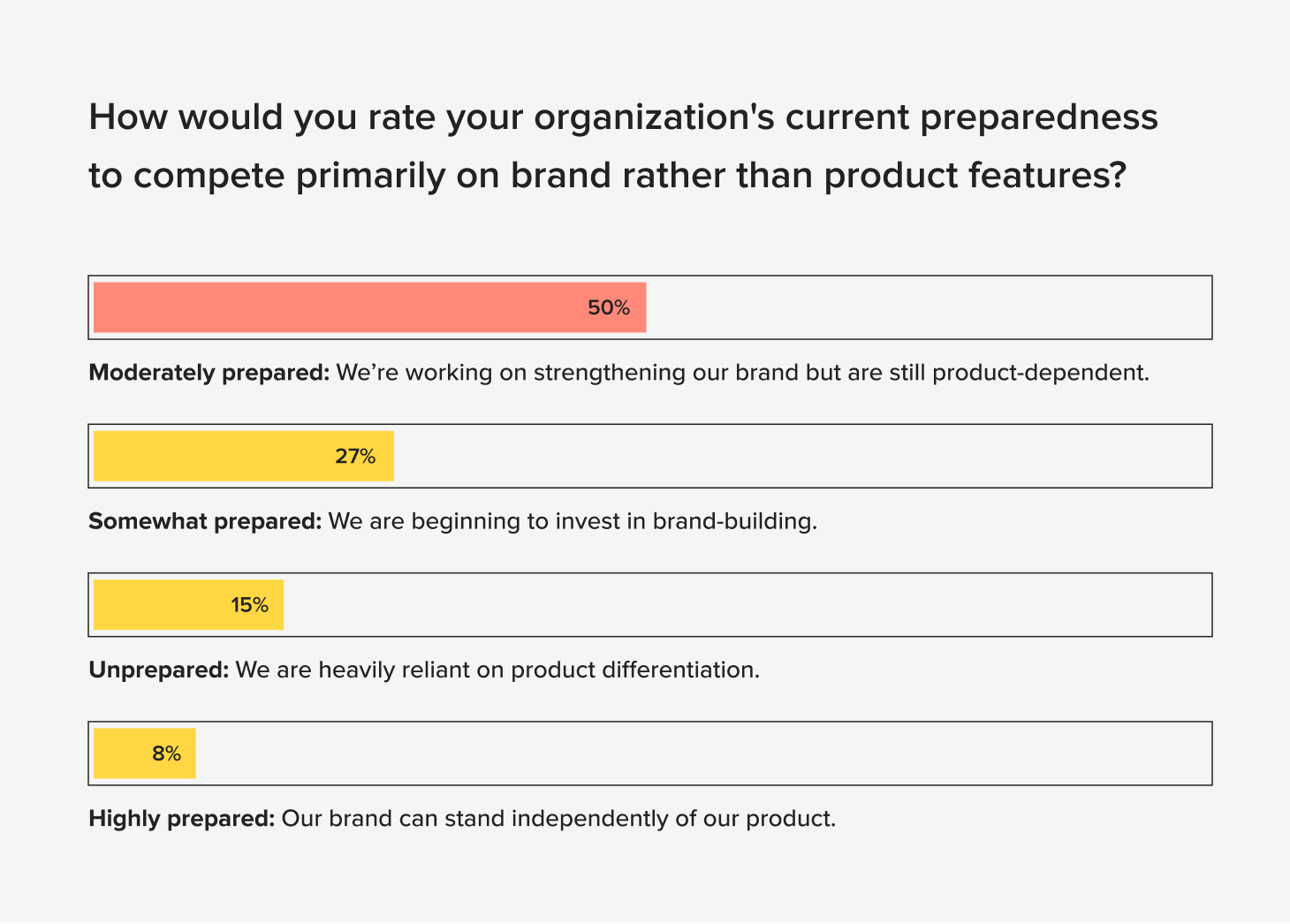
Only 8% of marketing leaders feel fully prepared to compete on brand alone. But here’s what’s interesting: 50% are actively building toward this capability, creating a wave of companies in purposeful transition.
Why It Matters: This isn’t a binary state, prepared or unprepared. It’s a spectrum, and most companies are moving along it. The research shows meaningful brand impact typically appears within 3-12 months, fast enough to influence annual planning and pipeline development.
What Leading Companies Do: They’ve expanded brand thinking beyond marketing. While only 40% of all companies include sales in brand development, the prepared companies ensure brand influences every customer touchpoint. They measure differently too—tracking branded search, direct traffic, and share of voice as leading indicators.
Finding #4: The Investment Gap Creates Competitive Opportunity
56% of companies spend less than 10% of marketing budget on brand, despite strong brands delivering 74% higher returns and commanding 46% more market share. When asked about unlimited budgets, these same leaders consistently prioritize brand initiatives.
Why It Matters: This gap between recognized value and actual investment won’t last. Markets reward companies that act on insights before they become conventional wisdom. Companies increasing brand investment now, while others hesitate, can build competitive advantages that take years for others to catch up to.
What Leading Companies Do: They’re rebalancing portfolios gradually, typically shifting 5-10% of budget toward brand each year while maintaining demand generation strength. They connect brand investment ROI to business metrics: reduced CAC, shorter sales cycles, premium pricing power.
The Multiplier Effect
These patterns reveal something larger: the companies pulling ahead aren’t choosing between product and brand. They’re building both, understanding that brand multiplies product value rather than replacing it.
As the research shows, this evolution respects what got B2B tech here—product excellence—while preparing for what’s next.
In markets where competitors can catch up faster than ever before, brand becomes the differentiator that compounds rather than depreciates.
Data for this post was pulled from Block Club’s 2025 report B2B Tech Brands Have Conquered Product. Now What? surveying 60 VPs and CMOs from leading B2B tech companies.
Frequently Asked Questions
What are the top insights from B2B brand research in 2025?
The four key insights are: 30% of companies admit features are copyable and are building alternatives, customer stories outperform features by 14 points, only 8% are brand-ready but 50% are actively building capability, and the investment gap (56% spend <10% on brand) creates opportunity for early movers.
How much more effective is customer storytelling than feature messaging?
Customer-led storytelling outperforms feature-first messaging by 14 percentage points according to Block Club’s research of 60 VPs and CMOs at leading B2B tech marketing leaders. This represents a significant shift in what resonates with B2B buyers.
What percentage of B2B budget should go to brand building?
While 56% currently spend less than 10%, companies seeing 74% higher returns typically invest 25% or more in brand. Leading companies shift 5-10% of budget toward brand annually while maintaining demand generation.
How quickly can B2B companies see ROI from brand investment?
Most companies see meaningful brand impact within 3-12 months, fast enough to influence annual planning cycles and pipeline development. 38% see results in 7-12 months, while 28% see impact in just 3-6 months.
What’s the difference between being brand-ready and having a brand?
Having a brand means you have visual identity and messaging. Being brand-ready means your organization can compete on brand strength alone, with alignment across sales, product, and marketing to deliver consistent value beyond features.