

Here’s a number worth considering: Only 8% of B2B tech marketing leaders feel fully prepared to compete on brand alone.
This isn’t cause for alarm, rather opportunity for growth. Block Club’s latest research, surveying 60 CMOs and VPs at leading B2B tech companies, reveals a moment of transition where we’re witnessing an entire industry recognize that old playbooks need updating. Early movers are already charting the path forward with brand readiness.
Key Findings:
- Only 8% of B2B tech companies feel highly prepared to compete on brand alone
- Companies with strong brands see 74% higher returns on brand marketing investment
- Customer-led storytelling outperforms feature messaging by 14 percentage points
- Most companies see meaningful brand ROI within 3-12 months
- 30% of companies acknowledge their features are easily copied
What Is Brand Readiness?
Brand readiness is the organizational capability to differentiate and compete based on brand strength (including narrative, values, and customer perception) independent of product features. It’s not just about having a brand; it’s about having a brand strong enough to drive purchase decisions, command premium pricing, and create lasting competitive advantage.
Mapping the Landscape
The data paints a picture of where we are today:
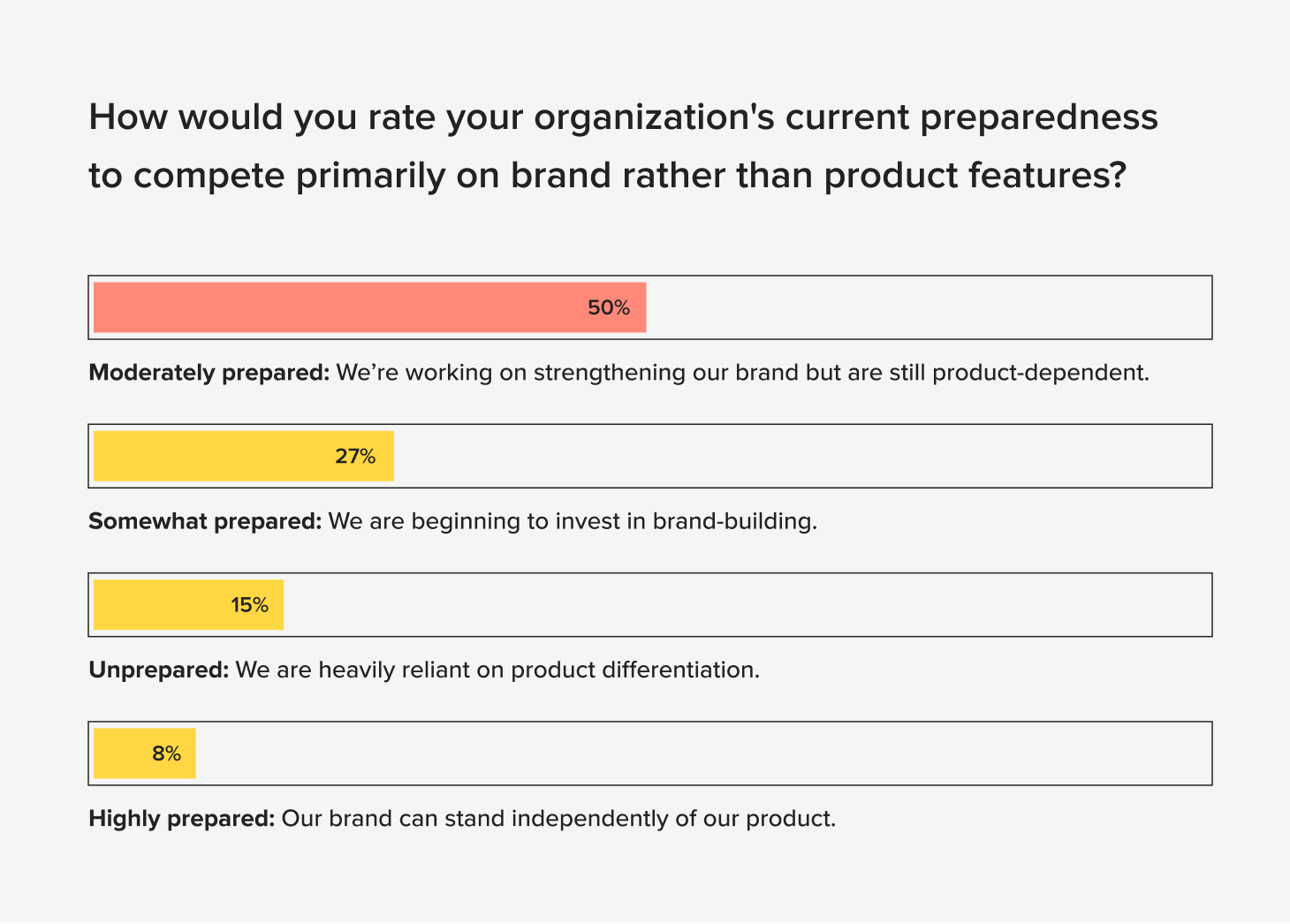
- 50% of survey participants describe themselves as moderately prepared.
They’re actively strengthening brand while maintaining product focus. - 27% are somewhat prepared.
They’re just beginning their brand investment journey. - 15% acknowledge being unprepared.
They’re still primarily product-dependent. - 8% are highly prepared.
They’re confident their brand can stand independently.
This distribution makes perfect sense to us. For decades, B2B tech has celebrated product innovation, and that will always remain critical. The question today is: as competitors move faster than ever, with less technical limitations and more accelerators, how can they build an equally or even more powerful brand moat to withstand any product-specific competitive fluctuations?
The Evolution of Competitive Advantage
With 88% of tech companies now using generative AI, we’re witnessing a fundamental shift in how products get built. Development cycles that once spanned quarters now can take as little as a few weeks. Features that required specialized expertise in the past can be propped up with AI assistance.
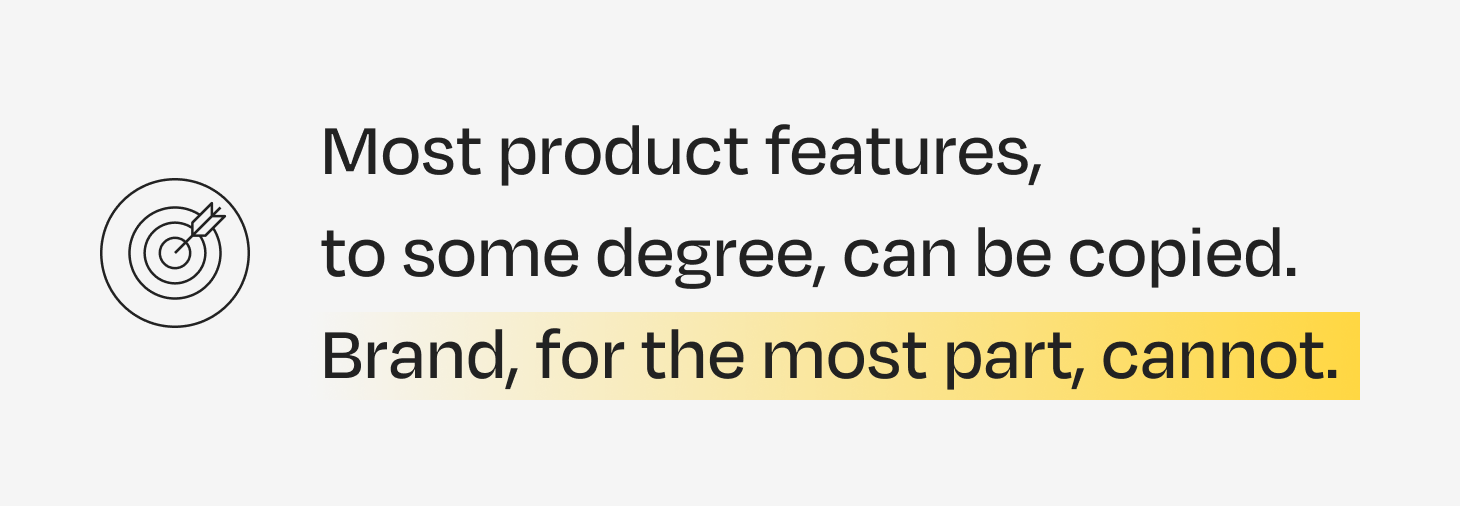
This acceleration is incredibly exciting as it fast-tracks innovation and raises the bar for everyone. It also means that technical differentiation, while still important, becomes increasingly temporary. As the report observes: Most product features, to some degree, can be copied. Brand, for the most part, cannot.
The companies recognizing this shift are the most pragmatic, understanding that lasting competitive advantage will require multiple moats, with brand’s moat deepening over time despite a consistently evolving product landscape.
The Multiplier Effect: When Brand Meets Product
That 50% of survey participants claiming moderate preparedness? They’re exactly where they should be, in transition. Building brand capability while maintaining product excellence isn’t as easy as flicking a switch; it’s a gradual rebalancing that respects what got you here while preparing for what’s next.
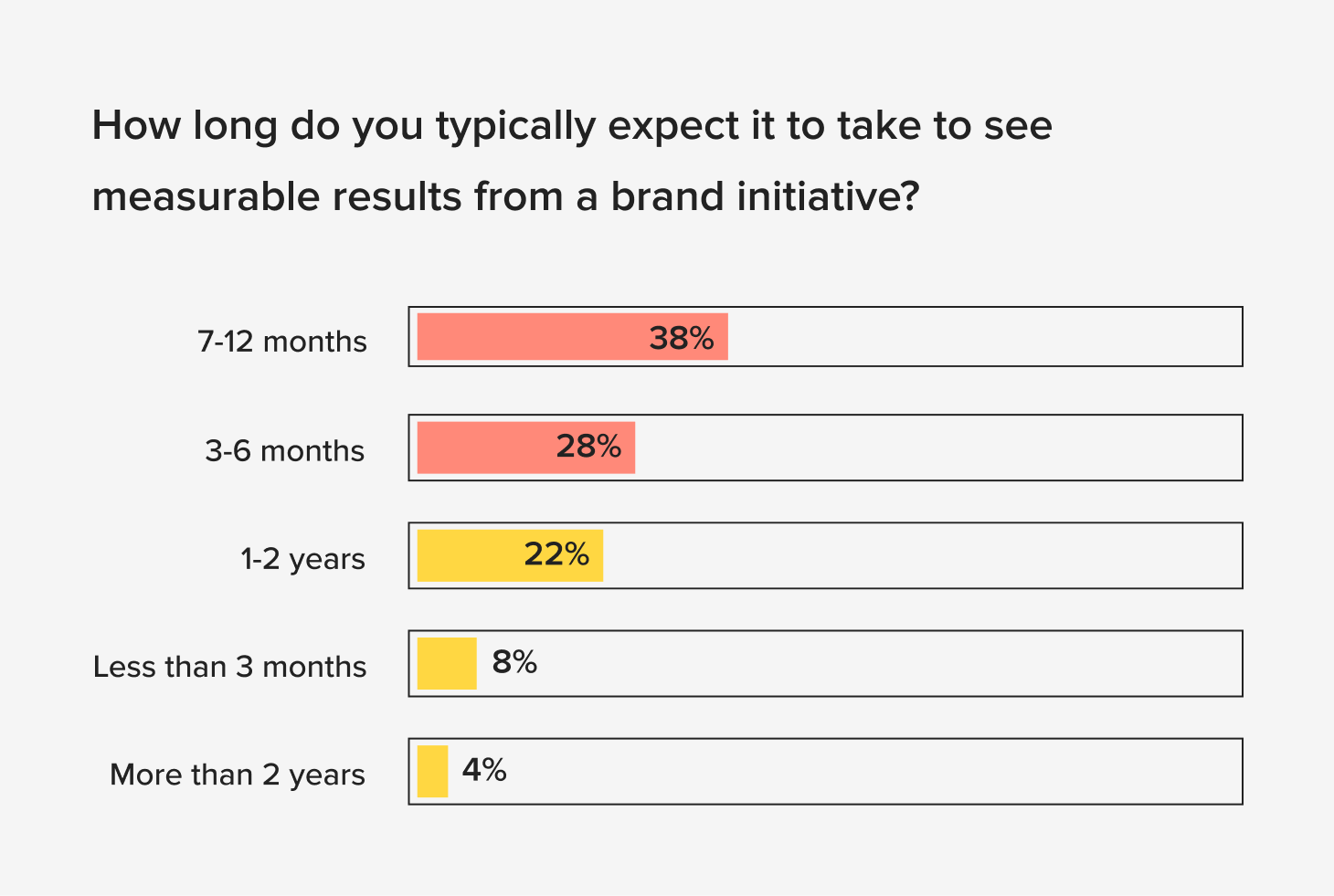
Our research shows this transition typically helps companies realize impact within as little as 3-12 months, fast enough to impact annual planning cycles. Companies making this shift report that customer-led storytelling outperforms feature-first messaging by 14 percentage points.
Consider what brand readiness actually looks like in practice:
- Sales teams that can articulate value through customer transformation stories
- Product roadmaps that consider brand coherence alongside technical requirements
- Customer success teams that reinforce both functional and emotional value
- Recruitment that emphasizes cultural contribution alongside technical expertise
Each element builds on the others, creating compound advantages over time.
Learning from the Early Adopters
The 8% who feel fully prepared aren’t necessarily smarter or better funded. They’ve simply started earlier on a journey that we believe everyone eventually needs to take. But the experience of these early adopters offers valuable lessons:
They’ve expanded brand ownership beyond marketing. While only 40% of companies currently include sales in brand development, the prepared companies ensure brand thinking influences every customer touchpoint.
They measure differently. Beyond traditional demand metrics, they track branded search, direct traffic, share of voice—leading indicators that predict future pipeline health.
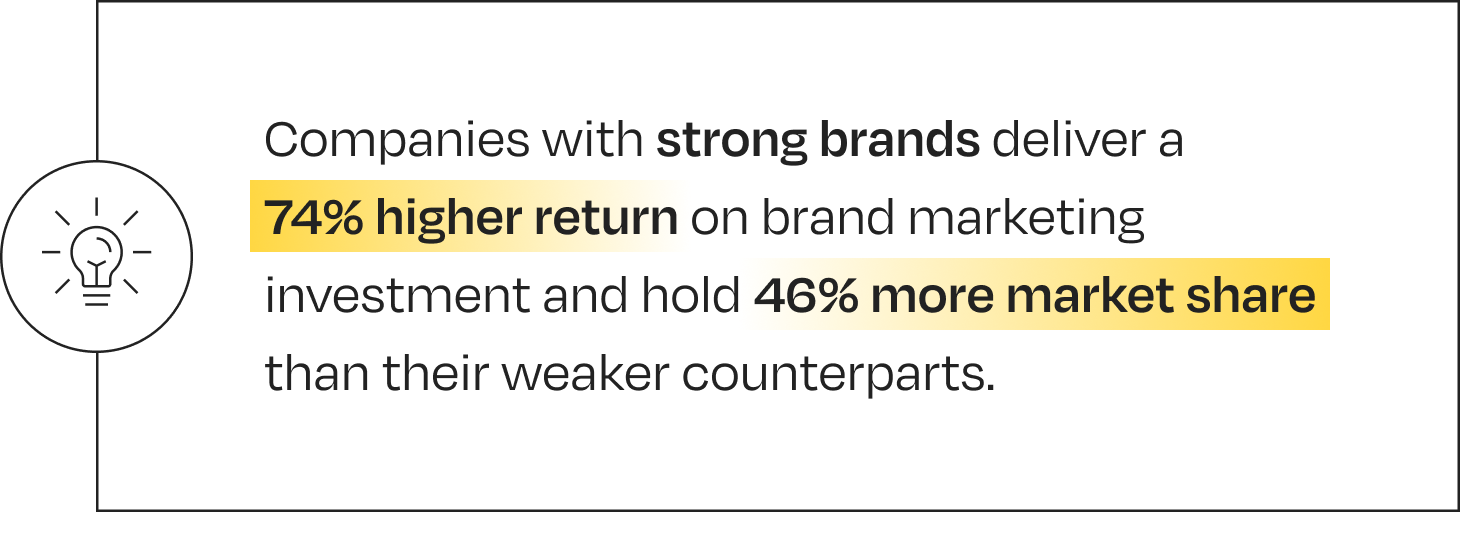
They connect brand to business value. Companies with strong brands deliver 74% higher returns on brand marketing investment and hold 46% more market share.
They’ve resolved the false tension between brand and demand. As the report’s roadmap illustrates, brand doesn’t replace performance marketing; it amplifies it.
Next Steps Forward
Building the confidence to compete on brand alone isn’t about wholesale transformation. It’s about intentional evolution. Start with reflection:
- What stories do your customers tell about you that have nothing to do with features?
- Where does your company’s expertise transcend your current product?
- What promises could you make that competitors couldn’t credibly match?
- How might brand investment reduce customer acquisition costs over time?
These aren’t pass/fail questions. They’re navigation points for a journey that every B2B tech company will eventually take. The only variable is timing.
The Window of Opportunity
Markets reward early clarity. While 30% of surveyed companies acknowledge their features are easily copied, most haven’t yet invested in the deeper differentiation that brand provides. This gap between recognition and action creates opportunity for those ready to move.
The path forward isn’t about abandoning what works. Product excellence remains table stakes in B2B tech. But in a market where competitors’ product teams move faster than ever, brand becomes the differentiator that compounds rather than depreciates.
We’re witnessing an industry in transition, with brand builders lighting the path with plenty of room for others to follow. The companies that embrace this evolution, building brand strength alongside product excellence, won’t just survive the shift. They’ll define what B2B tech marketing looks like on the other side.
The journey doesn’t require perfection. It simply requires starting.
Data for this post was pulled from Block Club’s 2025 report B2B Tech Brands Have Conquered Product. Now What? surveying 60 VPs and CMOs from leading B2B tech companies.
Frequently Asked Questions
What percentage of B2B tech companies are prepared to compete on brand?
Only 8% feel highly prepared to compete on brand alone, with 50% moderately prepared, 27% somewhat prepared, and 15% unprepared, according to Block Club’s 2025 research surveying 60 marketing leaders from leading B2B tech companies in the US, UK, and Canada.
How long does it take to see ROI from brand investment in B2B tech?
Most companies see meaningful results within 3-12 months, with 38% seeing impact in 7-12 months and 28% in 3-6 months. This is fast enough to impact annual planning cycles and influence pipeline.
What’s the difference between brand readiness and brand awareness?
Brand readiness is the organizational capability to compete on brand strength alone. It requires alignment across sales, product, and marketing. Brand awareness is simply whether people know your company exists. Readiness means your brand can drive purchase decisions independent of features.
How much should B2B tech companies invest in brand building?
Currently, 56% spend less than 10% of their marketing budget on brand. However, companies with 20%+ revenue growth typically invest 25% or more of their marketing budget in brand-building activities, suggesting a correlation between brand investment and growth.
Can you build brand strength without sacrificing product quality?
Absolutely. Brand amplifies product excellence rather than replacing it. The most successful B2B tech companies build both strong products AND strong brands. Think of brand as your second competitive engine, not a replacement for the first.